
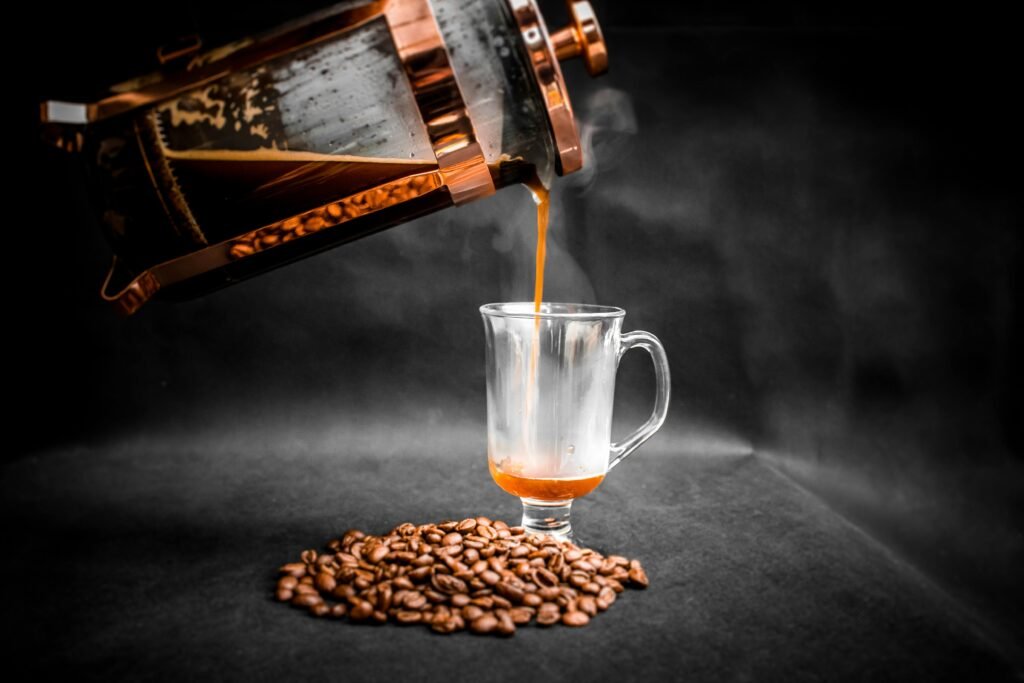
Types of coffee pots and how they work can sound a bit technical at first, but once the basic ideas click, it all becomes very simple. Each style of coffee pot follows the same basic rule—hot water meeting ground coffee—but the way they bring those two together changes the flavour, strength, and feel of the drink.
Below is a clear, brand‑neutral walkthrough of the most common types of coffee pots, how each one works, and what is happening inside while the coffee brews.
What a coffee pot actually does
Every coffee pot has three basic jobs:
- Hold ground coffee in place.
- Move hot water through those grounds.
- Separate the liquid coffee from the used grounds.
The big differences between designs come down to how the water moves (gravity, pressure or immersion), how long it stays in contact with the grounds, and whether heat is added during brewing or only before it starts. Changing those three things changes how strong, smooth or intense the coffee tastes.
Simple filter coffee pots (drip brewers)
A classic filter coffee pot, sometimes called a drip coffee maker, uses gravity and a paper or metal filter.
- Ground coffee sits in a filter basket.
- Water is heated in a small tank or reservoir.
- Hot water travels up a narrow tube and drips over the grounds.
- Gravity pulls the water through the coffee bed into the pot below.
- The filter keeps the grounds back while the liquid flows through.
Because the water passes steadily through the coffee instead of sitting in it, the contact time is controlled by grind size and the rate of dripping. Finer grounds slow the flow and extract more; coarser grounds let water run through faster and extract less. Many household machines keep the finished coffee warm with a hot plate under the glass jug, but the actual brewing happens in the basket above.
Pour‑over coffee pots and kettles
Pour‑over coffee pots use the same principle as drip machines but give the person more control. Instead of a built‑in heater and pump, you pour hot water by hand.
- A cone or flat‑bottomed dripper holds a filter and ground coffee.
- The dripper sits on top of a jug, mug or small glass pot.
- Water is heated in a kettle separately.
- You pour water in stages over the grounds, usually in a slow spiral.
Because you control the pouring, you control how quickly the water passes through. A slow, steady pour increases contact time, while a faster pour reduces it. Many people also pour a small amount first to “bloom” the coffee, letting trapped gases escape before the full pour. The pot itself simply collects the liquid that drains through.
Stovetop moka pots
A stovetop moka pot uses steam pressure rather than simple gravity. It is usually made of metal and has three main sections:
- Bottom chamber for water.
- Funnel‑shaped basket in the middle for ground coffee.
- Upper chamber where brewed coffee collects.
Here is what happens on the hob:
- Water in the bottom chamber heats up.
- As it nears boiling, steam builds and pushes the hot water upwards.
- The water is forced up through the coffee basket under pressure.
- It continues to rise through a central tube into the upper chamber.
The process stops when the bottom chamber is nearly empty. Because the water is under pressure and quite hot, extraction is strong and quick. The pot does not create the same pressure as a café‑style espresso machine, but it follows a similar idea—forcing water through a compact bed of coffee.
Traditional espresso machines and small home espresso pots
An espresso machine uses higher pressure than a moka pot and a very short brewing time.
Core parts are:
- A pump that pushes water.
- A boiler or heater that brings water close to boiling.
- A metal filter holder (often called a portafilter) filled with fine coffee.
- A spout where espresso flows into a cup.
The steps inside:
- Ground coffee is firmly packed into the filter basket.
- Hot water is pumped through at high pressure.
- Water squeezes through tiny gaps between particles in a few seconds.
- The resulting drink is concentrated, with a layer of crema on top.
Because the water is under strong pressure and the coffee is ground very finely, flavour is extracted quickly. The pot or machine stops the flow either with a switch or automatically after a set volume. Everything is designed to control pressure, temperature and time very closely.
French press (cafetiere) pots
A French press, also called a cafetiere, is one of the simplest designs. It relies on immersion rather than flow.
The pot is usually a glass or metal cylinder with:
- A plunger rod.
- A metal mesh filter at the end of the rod.
- A lid with an opening for pouring.
How it works:
- Coarse ground coffee goes directly into the pot.
- Hot water is poured over the grounds.
- Coffee and water sit together, usually for a few minutes.
- After the steeping time, the plunger is pressed down slowly.
- The mesh pushes the grounds to the bottom, separating them from the liquid.
Here, extraction depends mainly on how long the coffee steeps and how coarse the grind is. There is no paper filter, so more of the natural oils and tiny particles stay in the drink, giving it a heavier body. The pot itself does not heat the water; that is always done separately.
Percolator coffee pots
Percolators move water in a looping cycle, passing it through the grounds several times.
Typical parts:
- A lower section that holds water.
- A central tube and a perforated basket for coffee near the top.
- A lid that allows steam to condense and drip back.
During brewing:
- Water in the base heats up.
- Rising bubbles push hot water up the central tube.
- The water spills over the top and falls through the coffee basket.
- Brewed coffee then drips back into the main chamber.
- This cycle repeats until the heat is reduced or the pot is removed.
Because the same liquid passes through the grounds repeatedly, the coffee can become very strong if left too long. Heat level and brewing time are the main controls. The pot is a closed loop system, unlike drip coffee where fresh water passes through just once.
Vacuum (siphon) coffee pots
Siphon coffee pots look unusual but follow a clear physics principle: changing vapour pressure moves water between two chambers.
They normally have:
- A lower globe or beaker for water.
- An upper chamber for coffee grounds with a filter at its base.
- A tube connecting the two.
- A stand and heat source.
The process:
- Water goes into the lower globe and is heated.
- As it heats, vapour pressure forces water up the tube into the upper chamber.
- Ground coffee waits in the upper section, where the water mixes with it.
- After the brewing time, the heat is removed.
- As the lower globe cools, pressure drops and brewed coffee is sucked back down through the filter, leaving grounds above.
This method combines immersion (coffee and water sit together) with a clean separation by cloth or glass filter. The pot relies entirely on temperature and pressure changes, without pumps or electricity.
Cold brew pots and jugs
Cold brew pots work without any heat at all, using time to extract flavour.
Most designs include:
- A large jug or bottle.
- A central or side filter basket for coarse grounds.
- A lid to seal the pot during steeping.
How it works:
- Coarse coffee goes into the filter basket.
- Cold or room‑temperature water is poured over the grounds.
- The pot is sealed and placed in the fridge or on the counter.
- The coffee steeps for many hours, often overnight.
- The filter basket is removed, leaving a chilled concentrate or ready‑to‑drink coffee.
Because the water is cool, extraction is slow and gentle. Time replaces heat as the key factor. Many people dilute the concentrate with water or milk before drinking. The pot simply keeps everything contained and easy to separate.
Metal versus glass and other design details
Across all these types, a few design choices affect how a coffee pot behaves:
- Material
- Metal retains heat well and is sturdy on the hob.
- Glass lets you see the brew and does not affect taste but can lose heat faster.
- Plastic components are light and cheap, but are usually placed away from direct heat.
- Filter style
- Paper filters catch fine particles and much of the oil, giving a cleaner cup.
- Metal filters allow oils and some fine sediment through, resulting in a fuller body.
- Cloth filters sit between the two, blocking more particles but keeping many oils.
- Shape and size
- A narrow bed of coffee slows water and can increase extraction.
- Wider filters allow faster flow.
- Larger pots need more careful control of heat and timing so the bottom does not over‑extract while the top is still under‑brewed.
Bringing it all together
At heart, every coffee pot is just a tool for bringing water and coffee grounds together, then separating them again in a controlled way. Some use gravity, some use steam or pump pressure, and others rely on long immersion, but the same basic principles apply across them all. Understanding how each design moves water, manages contact time, and filters the result makes it easier to choose and use any pot without needing advertising, rankings or brand claims—and that knowledge stays useful no matter how trends or product lines change.
FAQS
- Do all coffee pots need paper filters?
No. Some use paper filters, but many designs (like French presses, moka pots and some metal pour‑over cones) rely on built‑in mesh or metal filters instead. - Why does grind size change between coffee pots?
Because it controls how fast water moves through the coffee. Finer grinds slow the flow for methods like espresso, while coarser grinds suit immersion styles like French press. - Is a moka pot the same as an espresso machine?
Not quite. Both use pressure, but an espresso machine works at much higher pressure, so the drink it produces is denser and more concentrated than moka pot coffee. - Which coffee pots can heat the water themselves?
Electric drip brewers and electric percolators usually heat water on their own, while French presses, pour‑overs and stovetop moka pots need hot water from a separate kettle or hob. - Can one bag of coffee beans work in every pot?
Yes, the same beans can be used across all methods, as long as the grind size is adjusted to match the coffee pot and brewing style.
In case you fancy reading a bit more around this, here are some handy next stops:
- Discover how supermarket hygiene inspections affect your weekly UK shop
- Explore a full guide to goat meat, from cuts to cooking in the UK
- Get the lowdown on semi‑skimmed milk and everyday fridge choices
- Take a closer look at grass‑fed butter and its health angles
And if you want to dig deeper into official food and health advice, these high‑authority UK resources are worth bookmarking: